

The culture audit in the boardroom could have been written this morning. Leaders who love themselves and their money. People boastful, proud, ungrateful, holding nothing sacred. Teams that betray their friends, that are reckless, that love pleasure more than anything that costs them. Then the sentence that makes it sting: they act religious but reject the power that could actually change them. Two thousand years later, the forecast still reads the same.
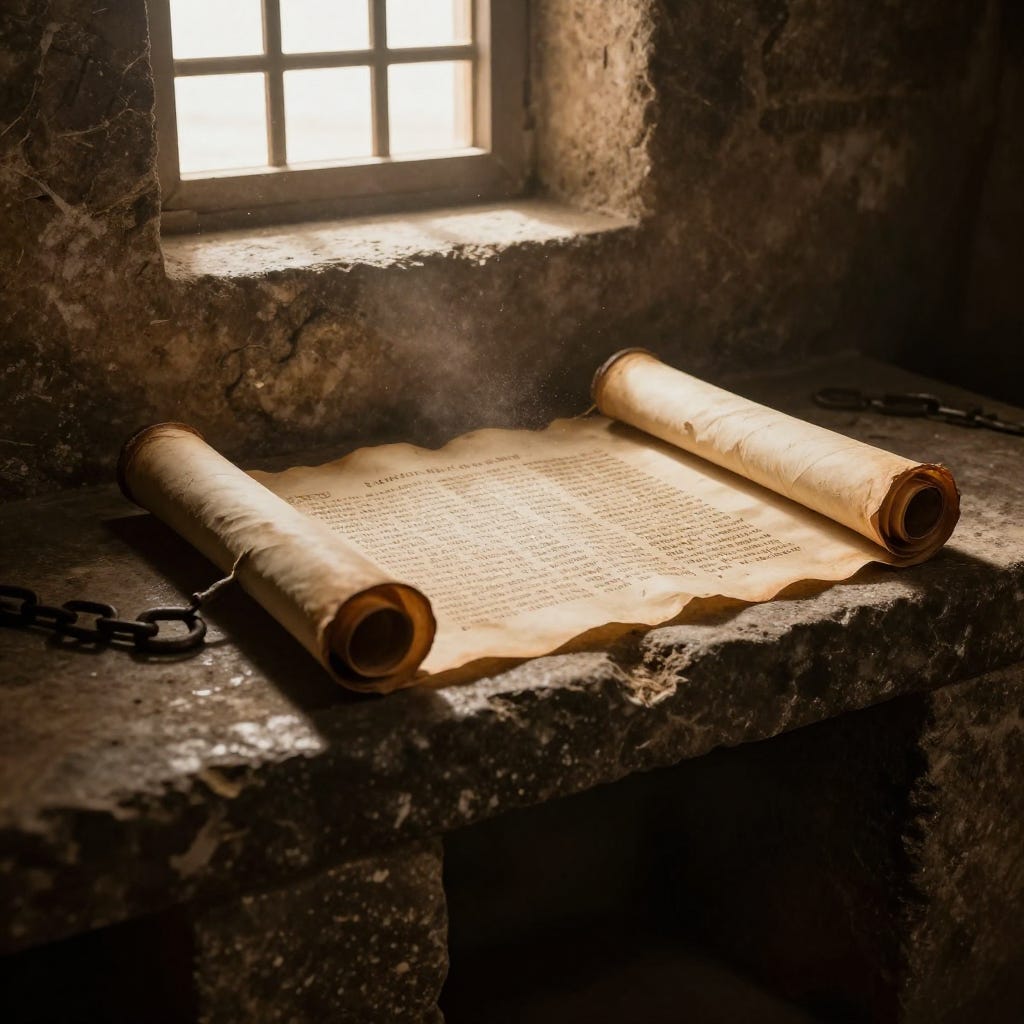
Paul wrote that catalog from a Roman cell. This is his last letter. Seven months we have built frameworks on top of this text. The Protocol in February. The Fortress in March. The Character Audit in July. August has been the slow walk back to the source, Paul pouring everything he knows into a younger leader named Timothy while the guards stand outside. Today the month turns toward its finish. Phase 5. The last days and the book that does not change when the culture does.
Paul begins with a warning that feels less like prophecy and more like a memo. “You should know this, Timothy, that in the last days there will be very difficult times. For people will love only themselves and their money. They will be boastful and proud, scoffing at God, disobedient to their parents, and ungrateful. They will consider nothing sacred. They will be unloving and unforgiving; they will slander others and have no self-control. They will be cruel and hate what is good. They will betray their friends, be reckless, be puffed up with pride, and love pleasure rather than God. They will act religious, but they will reject the power that could make them godly. Stay away from people like that!” (2 Timothy 3:1-5, NLT)
Sit with one detail. The hardest line in the list is not the cruelty or the betrayal. It is the last one. They will act religious but reject the power that could make them godly. A leader can keep the vocabulary, keep the reputation, keep the Sunday posture, and still reject the one thing that would actually change them. That is the failure mode hiding in plain sight. The right words and the untouched heart.
Paul then does what a good mentor always does. He does not let the diagnosis sit on Timothy without a contrast. He points to his own life. “But you, Timothy, certainly know what I teach, and how I live, and what my purpose in life is. You know my faith, my patience, my love, and my endurance. You know how much persecution and suffering I have endured. You know all about how I was persecuted in Antioch, Iconium, and Lystra; but the Lord rescued me from all of it. Yes, and everyone who wants to live a godly life in Christ Jesus will suffer persecution. But evil people and impostors will flourish. They will deceive others and will themselves be deceived.” (2 Timothy 3:10-13, NLT)
The list of the last days is not the whole story. There is a second list, and it has a name on it. Timothy has watched Paul live it out. Faith, patience, love, endurance. Persecution and rescue. The mentor did not hand his student a policy manual and wish him luck. He handed him a life to imitate. That is what a mentorship actually is at the finish. Not a download of information. A person saying, you watched me, now watch what I am about to tell you.
Listen to the turning point. “But you must remain faithful to the things you have been taught. You know they are true, for you know you can trust those who taught you. You have been taught the holy Scriptures from childhood, and they have given you the wisdom to receive the salvation that comes by trusting in Christ Jesus. All Scripture is inspired by God and is useful to teach us what is true and to make us realize what is wrong in our lives. It corrects us when we are wrong and teaches us to do what is right. God uses it to prepare and equip his people to do every good work.” (2 Timothy 3:14-17, NLT)
Remain faithful. That is a countercultural command in a season that rewards whoever shifts fastest. Scripture is not a decoration for leaders who enjoy Bible study. Paul names four jobs it does: it teaches what is true, it makes us realize where we are wrong, it corrects us, and it trains us to live rightly. The book does not change when the room does. It is the one thing Timothy can lean on when the last-days catalog starts looking like his own org chart.
I need to be honest about what this is not. This is not a promise that the culture gets better. Paul says the opposite. Evil people and impostors will flourish, and they will get worse. The leader who returns to Scripture does not get a smoother road. The leader gets a truer one. Paul is not promising insulation. He is promising sufficiency. Whether you are a believer or still exploring, you already know the secular version of this tension. Every leader has a source they go back to when the numbers move and the team loses its bearings. The question is whether that source can hold.
Bring this to Tuesday afternoon. First, hold the catalog up to your own leadership, not the culture at large. It is easy to point verse two at the world. Paul put it in a letter about a church. Read verses one through five again and ask, quietly, where the description fits you. Not to indict yourself. To see clearly. Second, name your source. When the season gets loud, what do you actually return to? If the Protocol and the Fortress ever stopped being anchored in Scripture, they would be productivity systems with a religious wrapper. Third, imitate before you instruct. Paul gave Timothy his own life as the syllabus. Someone on your team is watching how you live more than what you say.
The Field Manual at the end of this month will put this under the Leader’s Finish: Scripture’s sufficiency. Every framework we have walked this year returns to this one foundation. That is not pessimism. It is the deepest kind of realism, because the man writing it was watching the last days arrive in his own lifetime and still believed the book was enough to equip the next leader for the work.
Tomorrow Paul hands Timothy the charge itself. Preach the word, in season and out, because a time is coming when people will not endure sound teaching. The source does not change. The assignment does not either.
Leadership Challenge: Hold the last-days catalog up to your own leadership this week, not the culture at large. Where does verse five fit, acting religious but rejecting the power that could change you, and what is the true source you will actually return to when the noise gets loud?
I write about leadership at the intersection of timeless principles and modern workplaces. Follow for weekly insights on building teams that actually work. For more articles like this consider subscribing or sharing.