

Each of the twelve gates matters, but three carry a weight the others do not. The Brotherhood Gate is the foundation. Everything you do in the Protocol ultimately depends on having men who will tell you the truth. The Marriage Gate is the reveal. It is where the gap between the man you want to be and the man you actually are becomes visible every single night. The Fatherhood Gate is the legacy. Your marriage reveals who you are right now. Your fatherhood reveals what you will leave behind. If you fail here, you do not fail an argument or a season. You fail the next generation, and you do it in a hundred small moments you will not recognize as bricks until the structure is already built.
Solomon, the wisest man who ever lived, put it in a single sentence that fathers have been quoting and misquoting for three thousand years. “Direct your children onto the right path, and when they are older, they will not leave it” (Proverbs 22:6, NLT). Most men read that verse as a promise. Train them right and they will turn out right. The guarantee, the return on investment. That is not what Proverbs 22:6 is. Proverbs is wisdom literature, not covenant promise. The verse is not a guarantee your children will follow the path. It is a description of what you owe them regardless of what they do with it. You direct them onto the right path. That is your job. What they do when they are older is theirs. Too many fathers live as though the second half of the verse is the point. The first half is the point. Your work. Your faithfulness. Your direction. The rest belongs to God and to the person your child becomes.
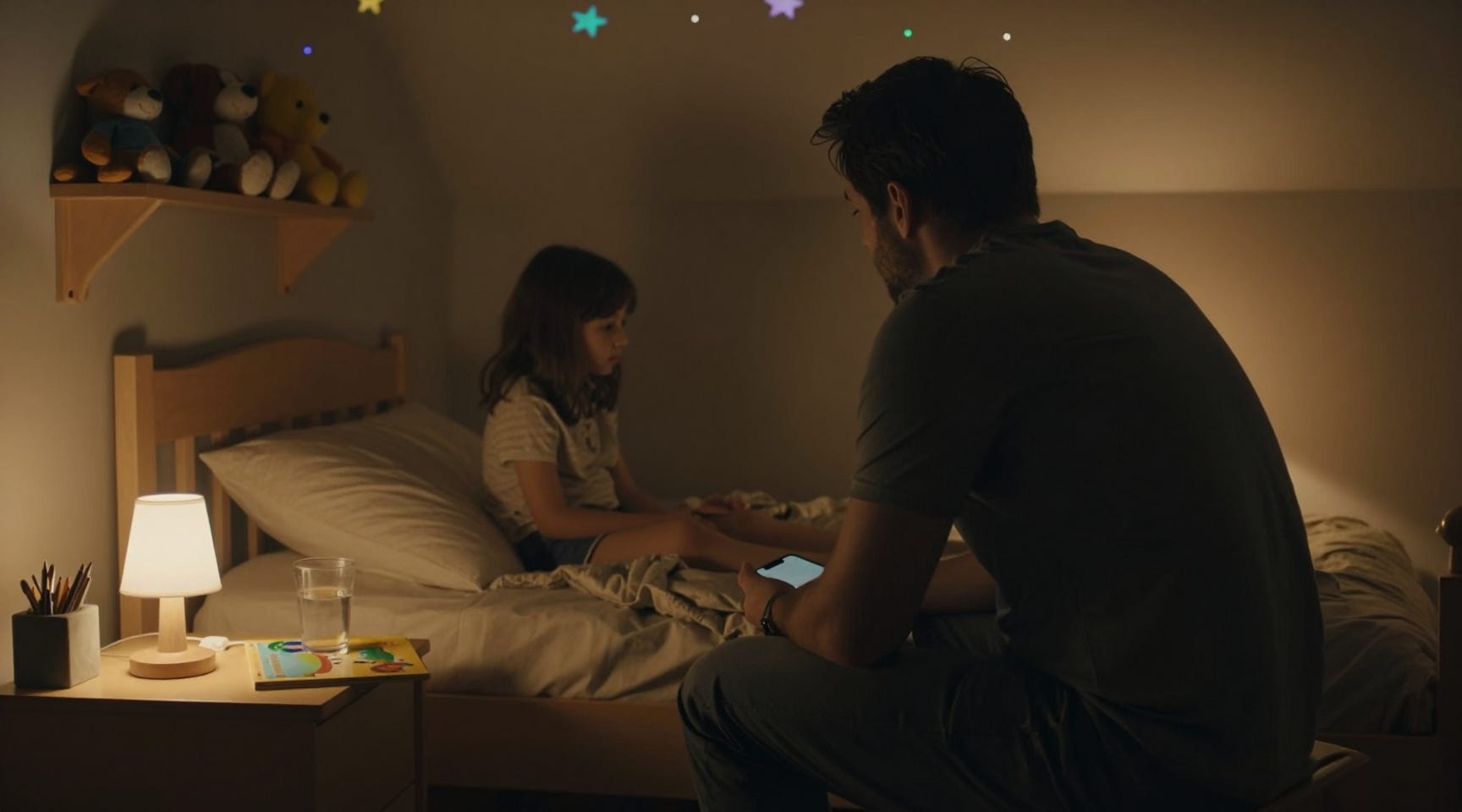
The failure mode at the Fatherhood Gate is not neglect in the way most people picture neglect. It is not absence. It is not abuse. Most fathers who fail at this gate are physically present. They live in the same house. They attend the games and the recitals. The failure mode is presence without engagement. The man who is in the room and somewhere else. His body is on the couch but his mind is at work, or on his phone, or running through the argument he had with his wife, or planning tomorrow’s meeting. The children notice. They will not say anything. They will adapt. They will learn that Dad is available for logistics and emergencies and not much else. They will stop trying to show him things. They will stop telling him about their day because the response is always the same half-listening noise humans make when they are not actually listening. The father is home. The father is not present. That is the failure mode, and it is the most common one because it is the easiest one. Presence without engagement costs nothing in the moment and costs everything over time.
ARREST at the Fatherhood Gate is the simplest and hardest move in the Protocol. It is closing the distance between your body and your attention. The phone goes face down. The laptop closes. The mental to-do list gets set aside for the next sixty seconds. ARREST is not walking out of the room. It is walking into it. The man who cannot arrest his distractions for his children is a man whose children will learn that they rank below whatever is on the screen. Paul wrote to the fathers in Ephesus: “Fathers, do not provoke your children to anger by the way you treat them. Rather, bring them up with the discipline and instruction that comes from the Lord” (Ephesians 6:4, NLT). The Greek word translated “provoke to anger” carries the sense of stirring up resentment. The father who is physically present and emotionally absent provokes his children not with harsh words but with the slow erosion of neglect. They are not angry because he hit them. They are angry because he was never actually there, and they learned to stop expecting him to be.
The AUDIT question at the Fatherhood Gate is direct: when your child last tried to get your attention, were you available? Not available in theory. Not available if it were an emergency. Were you available in the moment, with your full attention, in a way the child could feel? Most men will answer no, and most men will immediately follow that no with a justification. The day was long. The kid was repeating himself. The timing was inconvenient. The problem is not that the justification is false. The problem is that the child does not care. The child only knows one thing: Dad did not look up from his phone. Moses gave Israel a command that cuts through every justification a father can produce. “And you must commit yourselves wholeheartedly to these commands that I am giving you today. Repeat them again and again to your children. Talk about them when you are at home and when you are on the road, when you are going to bed and when you are getting up” (Deuteronomy 6:6-7, NLT). The instruction was not “schedule a weekly devotional.” It was “talk about these things when you are at home and when you are on the road, when you are going to bed and when you are getting up.” The entire rhythm of daily life becomes the classroom. The morning rush. The drive to school. The dinner table. Bedtime. Those are the classrooms. The question is whether the father showed up for the lesson.
ALIGN brings in the Witnesses, and at the Fatherhood Gate the key witness is what your own father did or did not give you. Every man brings his own father into the room when he becomes one himself. The man whose father was absent will either overcorrect with intensity or repeat the absence. The man whose father was harsh will either discipline too hard or refuse to discipline at all, because authority feels like abuse and he is terrified of becoming the man who hurt him. The man whose father was engaged and present and attentive has a model. The rest of us have a cautionary tale or a wound. ALIGN asks: am I parenting from a model I chose or reacting to a model I survived? Paul gives the affirmative command alongside the warning. Instead of provoking, “bring them up with the discipline and instruction that comes from the Lord” (Ephesians 6:4, NLT). The discipline is not punishment. The Greek word is paideia, the same root as education and formation. It is the discipline of shaping, not the discipline of breaking. Paul is describing a father who is actively building something in his children, not a father who is merely managing behavior. The ALIGN question is whether your engagement with your children looks like formation or crowd control.
ACT at the Fatherhood Gate is not a program. It is not a curriculum. It is not a family mission statement. ACT is the next small moment. The child walks into the room while you are working. The child wants to show you something you have shown them before, or asks the question you have answered three times already. The default reflex is the half-glance and the distracted murmur. ACT is looking up. ACT is giving the next sixty seconds your full attention, not because the moment is important to you but because the moment is important to them and you are the one person whose attention they most want. The man who runs this ACT one hundred times in a week has built something that cannot be scheduled. His children know he is available, and they know it not because he told them but because he proved it a hundred times.
David wrote something in the Psalms that lands like a hammer on the chest of any father who has ever wondered whether he is doing enough. “Children are a gift from the Lord; they are a reward from him. Children born to a young man are like arrows in a warrior’s hands” (Psalm 127:3-4, NLT). Arrows in a warrior’s hands. The image is not of decoration. It is not of sentiment. It is of a weapon being aimed at a target the warrior will not live to see struck. You shape the arrow. You sight the target. You release. The arrow flies further than you can follow. You aim them at a future you will not inhabit, and then you let them go. The father who treats his children like trophies or extensions of his own ambitions has missed the image entirely. The father who treats them like arrows knows two things. The work of shaping is his. The flight is theirs.
The weight at the Fatherhood Gate is not that you will know whether you succeeded. The weight is that you will not know for years, and you must keep showing up anyway. You are building a fortress or a ruin in your children, and the bricks are the small moments. The moment you looked up from your laptop. The moment you did not. The word of encouragement you gave without being asked. The word of criticism you let escape because you were tired and not thinking. Every single one of those moments is a brick. None of them feels important in isolation. The house you are building is made entirely of ordinary moments, and the only question is whether the moments are building something solid or something hollow.
Paul wrote the fathers at Colossae with the same command in fewer words. “Fathers, do not aggravate your children, or they will become discouraged” (Colossians 3:21, NLT). The father who is present and unavailable aggravates slowly. The child deflates over years of half-glances and explanations the father does not remember offering because he was not paying attention when he gave them. The discouraged child is the one who stopped hoping for more and learned to live on less. The father who arrests his attention and audits his presence and aligns his parenting to formation instead of crowd control refuses to let his children live on less.
The closer at the Fatherhood Gate is not about whether your children succeed. It is about whether you showed up in the moments that no one else saw. The professional accomplishments will fade. The titles will change. The projects will be completed and forgotten. What remains is the structure you built in the people you raised. Arrows in a warrior’s hands, aimed at a future you will not see, shaped in a thousand small moments you might not remember but they will. The gate is open every day. The question is whether a watchman is standing at it.
Leadership Challenge: This week, identify the three daily moments when your children are most likely to approach you and you are most likely to be distracted. For most fathers it is the first ten minutes after walking in the door from work, the dinner table, and bedtime. During each of those windows this week, run a sixty-second ARREST. Phone face down. Laptop closed. Mental to-do list set aside. For sixty full seconds, give your child your eyes and your attention in a way they can feel. Do it once in each window, every day this week. That is three minutes a day. Three minutes of governed attention. At the end of the week, ask yourself whether your children noticed. They will have.