

A launch can gather a crowd. Keeping what launched alive usually gathers a much smaller one. The new office opens, the system goes live, or the initiative receives its public announcement. Then someone has to answer the ordinary questions, maintain the schedule, train the next person, carry supplies, reconcile the exceptions, and notice what is quietly wearing out. Leaders often celebrate the visible build while treating the work that sustains it as background. Nehemiah 11 turns our attention toward that background. Jerusalem had a wall, leaders, and renewed commitments. It still needed people willing to make their lives inside the city.
The assigned passage is Nehemiah 11:1-2. The leaders were already living in Jerusalem. A tenth of the people from the other towns of Judah and Benjamin were chosen by sacred lots to live there as well, while others volunteered. The New Living Translation gives the community’s response in verse 2:
“And the people commended everyone who volunteered to resettle in Jerusalem.” (Nehemiah 11:2, NLT)
The rest of the chapter names people from Judah and Benjamin, priests, Levites, Temple servants, gatekeepers, singers, administrators, and residents of the surrounding villages. Some worked at the Temple. Some handled work outside it. Some guarded gates. Some carried daily responsibilities established by royal command. The list can feel less dramatic than the opposition, speeches, and construction of earlier chapters, yet that is part of its witness. A rebuilt city is not sustained by a wall alone. It becomes a shared life through people, households, worship, administration, security, and repeated duties. This is the restored covenant community inhabiting Jerusalem, the holy city. It is not a staffing model for a modern company, and the sacred lot is not a method for assigning employees to inconvenient offices. The modest leadership principle is that lasting work depends on people who accept ordinary responsibilities after the visible project is complete.
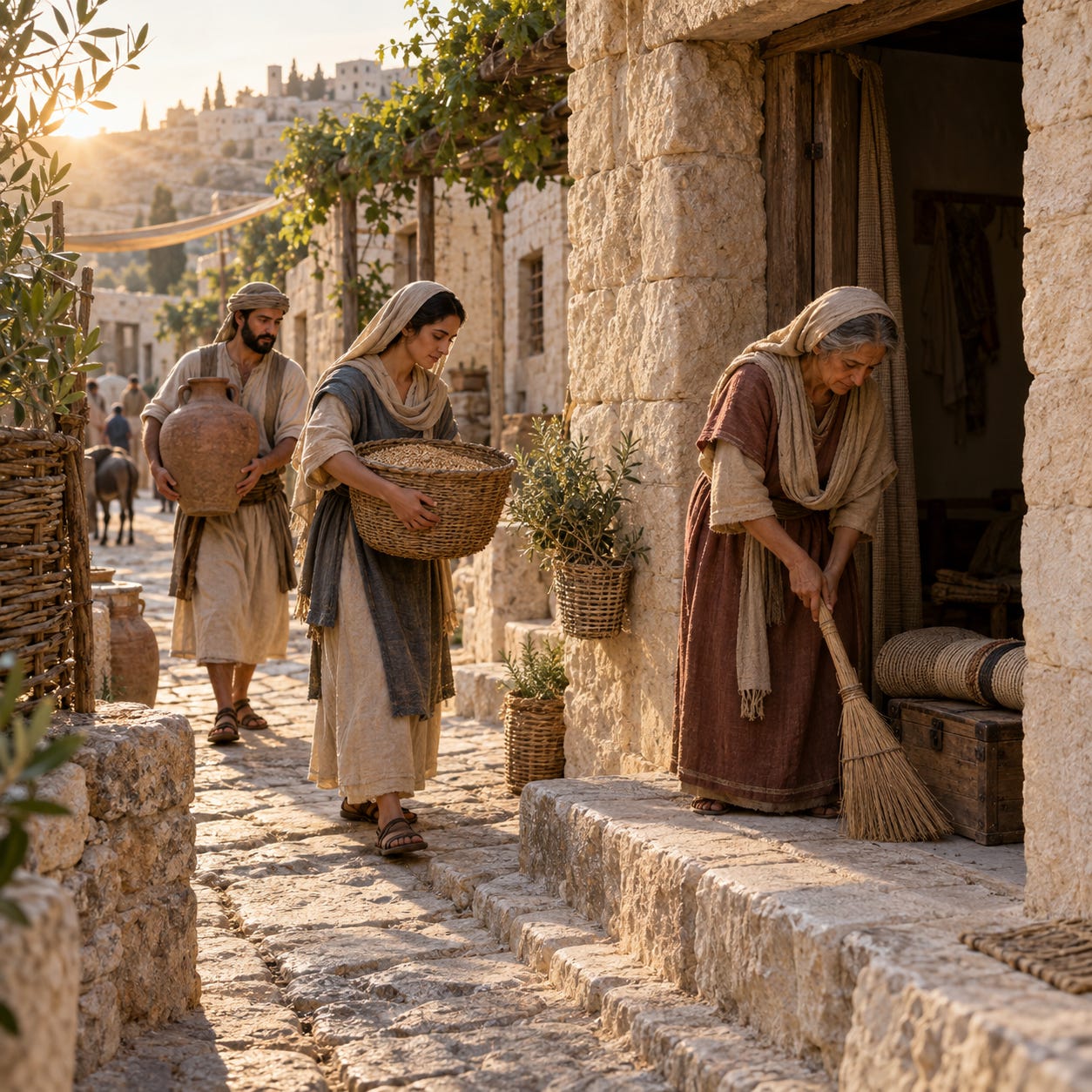
Those responsibilities deserve more than sentimental praise. Moving from another town into Jerusalem changed where people lived and how their households were arranged. The text does not give us permission to invent each person’s feelings or the exact cost, but it gives enough to see that resettlement was not a ceremonial gesture. People had to go. Some volunteered, and some were selected. A leader can misuse a passage like this by admiring sacrifice while remaining protected from it. The executive applauds the employee who covers another weekend, relocates for a troubled account, or keeps an understaffed process functioning, then treats that person’s reliability as an unlimited resource. Commendation without protection can become a polished form of extraction.
The vault’s chapter on reputation argues that trust is built in small moments when no one is watching. Its examples are deliberately ordinary: crediting another person, admitting ignorance, keeping a confidence, listening in a routine meeting, and treating people with dignity regardless of status. The Decision Fortress makes a related claim about legacy. Culture is the residue of repeated decisions, not the memory of one heroic project. Nehemiah 11 places that truth in a communal register. The city will be shaped by the people who perform daily responsibilities long after the wall’s completion has stopped feeling new. The work is not lesser because it is repetitive. Repetition is how a finished project becomes a functioning community. Hidden work should not become invisible work. Mature leadership learns to see what routine success has trained everyone else to overlook.
Consider a hypothetical company that launches a new customer-support platform. The launch team receives recognition for finishing on time. Afterward, a quieter group must clean duplicate records, answer confused agents, maintain routing rules, document exceptions, and cover the early-morning queue while the system settles. None of that work photographs well. Much of it is also where the customer experiences whether the launch actually succeeded. A responsible leader maps that sustaining work before assigning it. Which duties are temporary, and which are permanent? Who has the skill and capacity to carry them? Which assignments are voluntary, and which belong to a role? What current work will stop so the new work can fit? Who is receiving extra pay, schedule flexibility, authority, training, or a path to rotate out? Gratitude becomes credible when it changes the conditions under which the work is done.
Fairness also requires leaders to examine who keeps receiving the uncelebrated assignments. Dependable people are easy to ask again because they rarely create friction. Over time, the same workers become the institutional memory, the emergency coverage, and the cleanup crew. Their competence hides the cost from everyone else. Meanwhile, more visible assignments go to people whose work is easier to display. Honor the hidden contributor by naming the value of the work in promotion, compensation, workload, and succession decisions. Teach someone else to share it. Remove unnecessary steps. Give the person authority equal to the responsibility being carried. Ask whether the task still needs to exist before praising someone for enduring it. Some recurring work is essential and skilled. Some survives only because a reliable person keeps absorbing a broken process. Leaders should know the difference. Public thanks may be appropriate, but recognition should never become a substitute for rest, resources, or a fair distribution of burden. Nor should praise turn one person’s willingness into a permanent assignment they are no longer free to question.
Philippians 2:3-8 gives Christians a deeper reason to resist status-driven leadership. Paul calls believers away from selfish ambition and toward concern for others, grounding that humility in the self-giving of Christ. His subject is the life of the church and the unique obedience of Jesus, not a corporate technique for increasing output. An employer must not use Christ’s humility to pressure a worker into endless availability. A Christian leader should hear the passage first as a challenge to personal posture. Take interest in the people carrying the inconvenient work. Refuse to cling to status. Step into a low-visibility responsibility yourself when doing so serves rather than performs. Use authority to lift a burden, not to make someone else’s sacrifice sound spiritually impressive.
Choose one completed initiative your team now has to sustain. Write down every recurring task required to keep it useful for the next ninety days, including maintenance, training, handoffs, exception handling, and cleanup. Put a name beside each task. Then ask the person carrying it three questions: What part of this work is heavier than leaders realize? What authority or resource is missing? What should be rotated, simplified, or stopped? Do not begin by explaining why the burden exists. Listen until you can describe the cost accurately. Make one concrete change this week, and record the contribution where future staffing, pay, and promotion decisions are made.
Yesterday’s passage put commitment into writing. Nehemiah 11 shows people inhabiting those commitments through the ordinary life of the city. Tomorrow, the series will stop long enough to watch the community dedicate the work with gratitude and joy. Celebration will matter because people, not stones, have carried the story forward. The wall was visible. The life within it depended on daily faithfulness. Lead with enough attention to see the people who make your finished work live. Give them more than applause. Share the cost, strengthen their hands, and let the way you sustain the work reveal what you truly honor.
Leadership Challenge
Who is carrying the uncelebrated work that keeps one finished initiative alive? Ask what the assignment is costing, then change one condition through workload, authority, resources, rotation, or recognition.
I write about leadership at the intersection of timeless principles and modern workplaces. Follow for weekly insights on building teams that actually work. For more articles like this consider subscribing or sharing.