

There was a moment at Gilgal, three thousand years ago, when a king watched his army shrink hour by hour while he waited for the prophet to arrive. The Philistines had massed at Micmash with chariots like sand on the seashore. Saul’s men were deserting into caves and across the Jordan. The prophet Samuel had told him to wait seven days. Day seven was burning down. Samuel had not come.
Saul did the math the way every cornered leader does the math. The window is closing. The army is melting. The enemy is ready to charge. The prophet is late. The sacrifice has not been offered. Something had to be done. Saul did it. He took the priestly role that was not his, lit the burnt offering himself, and finished the ceremony just as Samuel walked over the ridge. Samuel’s first words were not a question of strategy. They were a question of obedience. “What is this you have done?” Saul’s answer was the first cousin of every leader’s answer when urgency wins. “I saw my men scattering from me, and you didn’t arrive when you said you would…” Then the line that gives away the diagnosis. “…So I felt compelled to offer the burnt offering myself…” (1 Samuel 13:11-12, NLT). I felt compelled. He named his impatience as necessity. He baptized his pressure as obedience. He lost his dynasty over a moment that, at the time, felt deeply, urgently right.
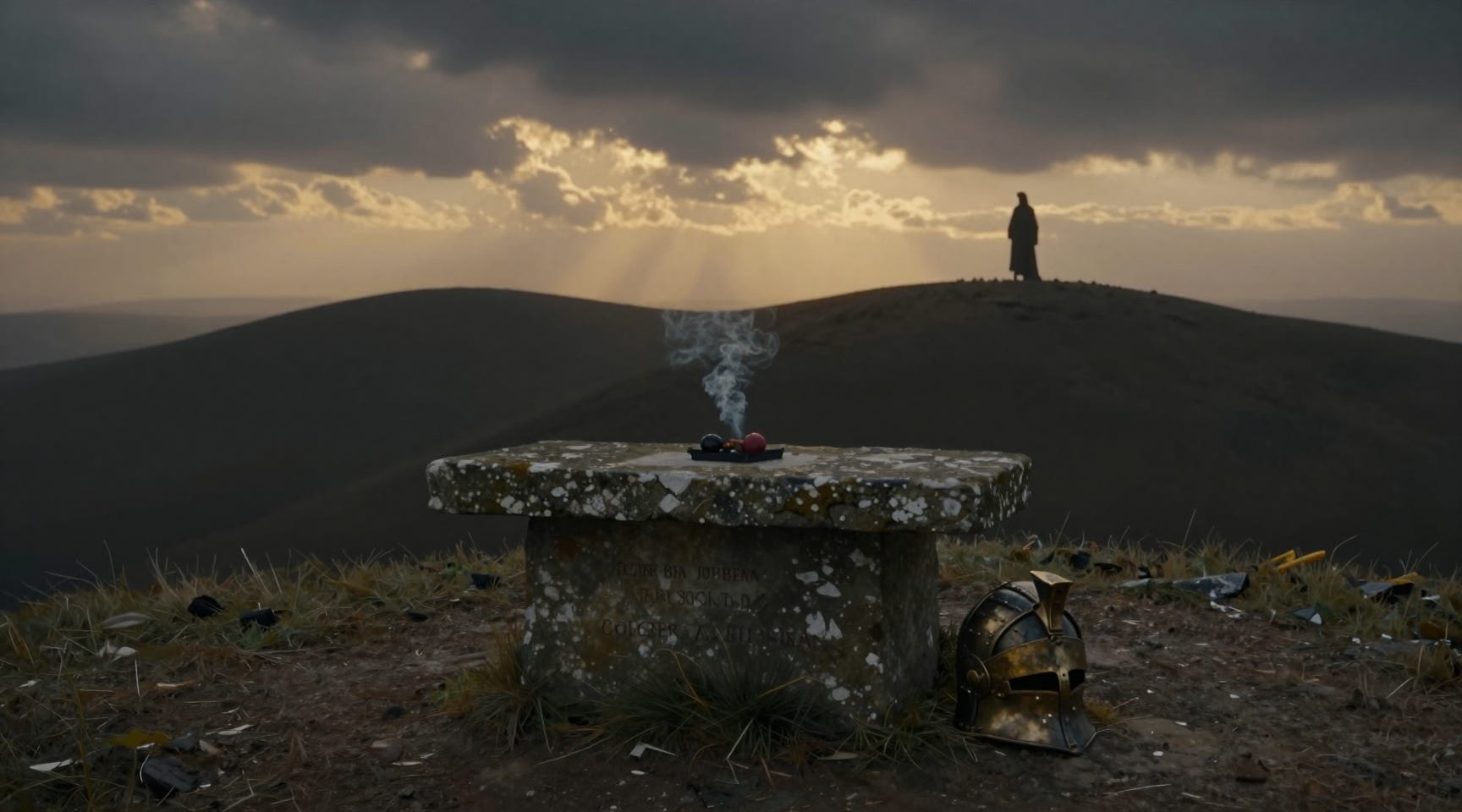
Yesterday we named the gate failure that lives in the body, the Send Reflex, the hand executing while the mind is still arriving. Today we name its older sibling, the gate failure that lives in the language. This time the leader gives the body’s relief a holier name.
The pattern has a name, and the name is the Urgency Counterfeit.
The Urgency Counterfeit is the move that takes the panic the body is generating and re-labels it as divine prompting. The leader feels the chemical surge of deadline pressure. Social pressure. The fear of looking indecisive. The fear of missing a window. None of that is the Holy Spirit. It is adrenaline and ego in a contested room. The leader, unwilling or unable to sit with the discomfort, reaches for the only language that sanctifies a fast move. “I felt led.” “I had a peace about moving fast.” “God opened the door and I had to walk through it.” “The window was closing.” “It was a now-or-never moment.” Suddenly Scripture, prayer, and obedience are all conscripted into serving what is, underneath, a chemistry problem. The language of the Spirit becomes a costume the flesh wears to walk past the gate.
The diagnosis is harder to swallow than the Send Reflex was. The Send Reflex at least admits to being rough. The leader who fires off a charged email knows, in some small back room of the conscience, that they were heated. The Urgency Counterfeit is more dangerous because it dresses up. It uses the right vocabulary. It quotes verses. It opens with prayer. The leader emerges from the move feeling spiritually validated rather than uneasy. That feeling is the tell. Authentic obedience rarely leaves a leader exhilarated and self-justifying. Counterfeit obedience almost always does. Saul did not feel guilty after the unauthorized sacrifice. He felt relieved. The chemistry resolved. He had a story. The story was wrong, but it was clean.
Most leaders do not have a discernment problem. They have a tempo problem.
They are running too fast to hear the whisper, and they are calling the noise of their own engine the voice of God. Listen to what the prophet Elijah was given as the central image after Mount Carmel. The wind came, and the Lord was not in the wind. The earthquake came, and the Lord was not in the earthquake. The fire came, and the Lord was not in the fire. After the fire, “the sound of a gentle whisper” (1 Kings 19:12, NLT). The whisper. The voice the leader has to slow down to hear. The voice that does not arrive in spectacle. The voice that does not arrive at the speed the body is demanding.
Jesus modeled the corrected pattern in a single moment in Mark. The whole town had gathered at Peter’s door. The crowd was healed. The disciples woke up the next morning and could not find Him. They eventually located Him alone in a deserted place, praying. Their first words were the soundtrack of every operator I have ever worked with. “Everyone is looking for you.” Jesus did not negotiate the urgency. He answered, “We must go on to other towns as well, and I will preach to them, too. That is why I came” (Mark 1:38, NLT). He let the urgent crowd go unanswered. He kept walking on the rhythm the Father had set, not the rhythm the demand was setting. That is the Spirit’s tempo. The leader who has never seen a leader walk at that tempo will never recognize when their own pace is being driven by something else.
In Watchman’s Protocol terms, the corrected pattern is ARREST. ARREST is not only hands off the keyboard. ARREST is the halting of the verdict. When the leader feels the surge of “I have to decide right now,” that surge IS the trigger to halt. The Watchman’s posture toward urgency is suspicion, not deference. The Protocol slows the decision precisely because urgency is trying to run it. The Watchman is not asking, “What does my urgency want?” The Watchman is asking, “What is my urgency made of?”
In practice this looks like a few unglamorous moves. The five-minute delay before the verbal yes. The night’s sleep before the resignation letter. The phone call to a trusted counselor before the contract gets signed. The “I will give you my answer Thursday” instead of the answer right now. None of those moves are heroic. None of them feel spiritual in the moment. All of them are precisely the moves the counterfeit cannot survive. Counterfeit urgency cannot tolerate a pause. The window will close, the deal will fall apart, the moment will pass, the Spirit will move on. The Spirit, of course, does no such thing. The God who made time does not panic about His own calendar.
There is a litmus test that has saved me more than once. Phrase it as a sentence the leader can say out loud. “If this is the Spirit, it will survive a 24-hour delay. If it cannot survive 24 hours, it is not the Spirit.” Say that sentence in the room. Say it on the phone. Say it to yourself. Watch what happens to the urgency. If the urgency intensifies, demands an answer, raises the stakes, frames the delay as betrayal or weakness, you have your diagnosis. The Spirit does not work by escalation. The flesh does. The room you are in does. The other party to the deal does. None of them are the Spirit, and the leader who cannot tell the difference will keep finding themselves at Gilgal, finishing sacrifices that were never theirs to offer.
The recovery is a Standing Order. Pre-decide it now, while you are clear, so the rule is in the wall before the surge arrives. “I will not call urgency the Holy Spirit until I have slept on it and tested it against Scripture and Counsel.” Write it down. Put it in the same place you keep the other Standing Orders.
Picture how this works on a Tuesday afternoon. The phone rings. A vendor calls with a now-or-never deal. The price is good. The window is twenty-four hours. The other party is pressing for a yes. The leader feels the familiar surge: act fast, this is providential, do not lose this. The Standing Order does not argue with the surge. It simply runs. The leader hears himself say, “I will give you my answer tomorrow morning at nine.” That is the entire move. The vendor protests. The pressure climbs. The Order holds. By that night the leader has prayed about it, talked it through with two people who have nothing to gain from the outcome, and noticed three details in the contract he had not stopped to read. By morning the answer is clear, and it is not the answer the surge was demanding. That is what the Order produces. Not certainty. Not a quicker yes. A leader who has not been ridden by his own chemistry.
The next time you hear yourself begin to say “I felt led to move fast,” stop the sentence. Read the Order. Sit with the silence the Order requires. Notice how the body protests. The protest is the data. The protest is what you were trying not to feel by moving fast in the first place.
Tomorrow we name the third ARREST anti-pattern, the Sunk-Cost Decision, the move that confuses momentum with direction. The Send Reflex is the body executing without the mind. The Urgency Counterfeit is the leader naming the body’s pressure as God’s voice. Tomorrow’s pattern wears yet another disguise. Three siblings. Each one speaks the language of speed. Each one disguises a deficit underneath.
The wind is not the Lord. The earthquake is not the Lord. The fire is not the Lord. The whisper is the Lord, and the leader who cannot slow down enough to hear it will keep mistaking their own engine for the voice of God. Saul lost a dynasty over one urgent fire. Most of us lose smaller things in smaller fires every week. The fortress has a gate, and the gate does not open faster for holier-sounding pressure. Slow it down.
Leadership Challenge: Name the most recent decision you made fast and called “Spirit-led.” If you applied the 24-hour test to that decision today, would it survive, or would the urgency you felt then look more like pressure than calling? Write down what the urgency was actually made of.