

A process can keep its name long after it has stopped doing its job. The weekly review still appears on the calendar, but the decisions happen elsewhere. The customer escalation policy still lives in the handbook, but favored clients receive exceptions no one records. The maintenance checklist still gets signed, though everyone knows two steps have become ceremonial. Nothing has collapsed, which makes the drift easy to defend. The dashboard remains green because it measures whether the process exists, not whether the commitment beneath it is still being kept. Nehemiah 13 begins after the wall has been rebuilt, the covenant has been renewed, the city has been inhabited, and the work has been dedicated. It is the chapter that asks what happens when a meaningful reform survives as a memory but weakens as a practice.
Nehemiah had returned to the court of King Artaxerxes and was absent from Jerusalem for a time. When he later came back, he found more than one isolated failure. A priest had given Tobiah space in a Temple storeroom. The Levites and singers had not received their assigned provisions, so they had left their duties to work their fields. Commerce had resumed on the Sabbath. Commitments named publicly in Nehemiah 10 had not continued to govern daily life. In Nehemiah 13:10-14 and 17-22, Nehemiah confronts leaders, restores the Levites, appoints trusted supervisors over the storerooms, closes the city gates before the Sabbath, and assigns guards. His question exposes the center of the problem:
“Why has the Temple of God been neglected?” (Nehemiah 13:11, NLT, excerpt)
This was not a generic productivity review. Nehemiah governed a restored covenant community, and the Temple provisions and Sabbath belonged to Israel’s worship and obedience under the Mosaic covenant. A manager cannot transfer those commands directly into a corporate policy, claim divine authority for a procedure, or treat a missed deadline as covenant rebellion. The narrative does reveal something leaders should take seriously: reform requires continuing stewardship. A sincere launch, a written commitment, and a moving celebration do not make a practice self-sustaining. People change roles. Incentives pull in new directions. Exceptions accumulate. The work begins to drift when no one compares present reality with the purpose everyone once agreed to serve.
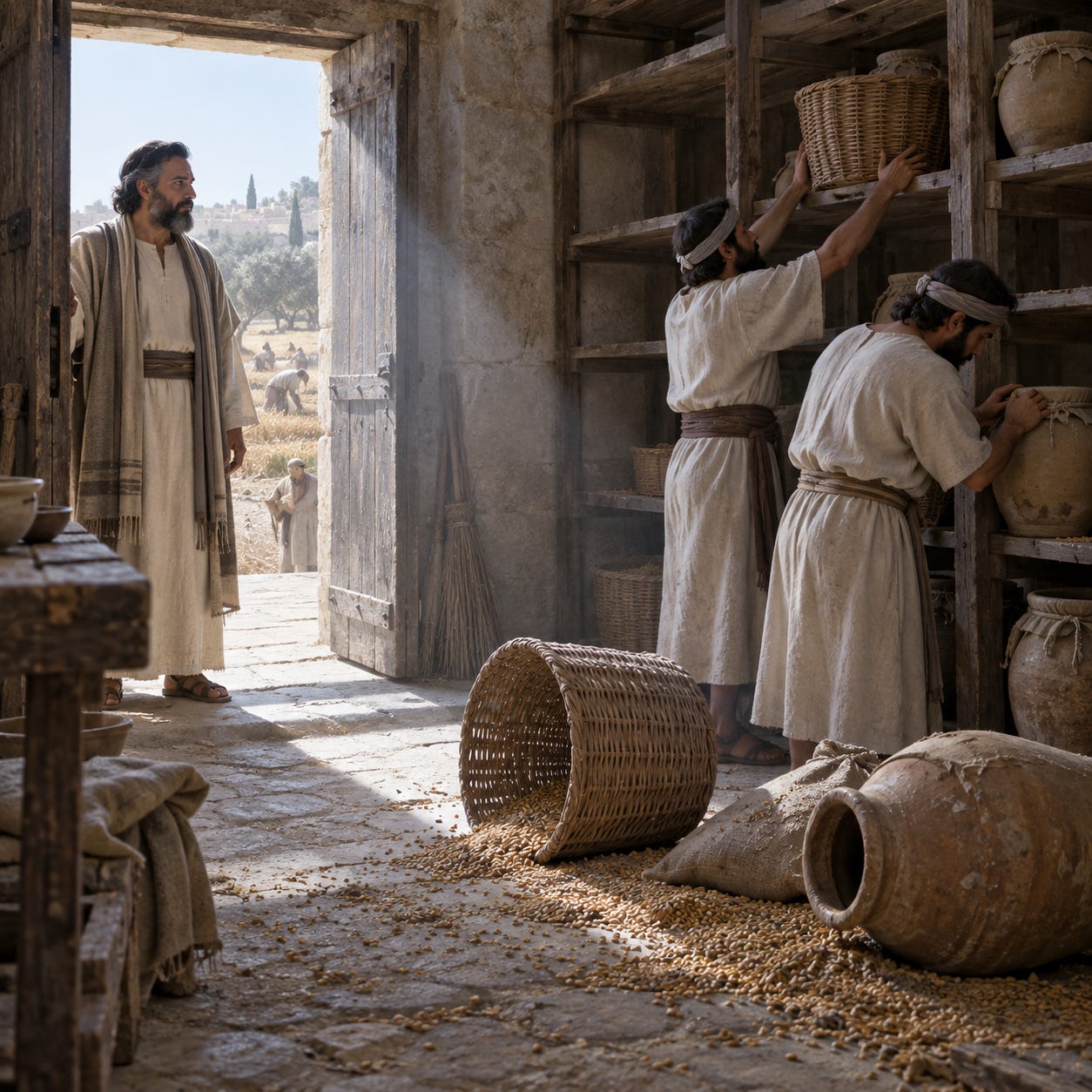
Nehemiah does not discover one careless Levite and blame the person nearest the failure. He follows the broken chain. The people had stopped bringing the prescribed portions. The storerooms were compromised. Those responsible for worship returned to their fields because they still needed to eat. The visible absence at the Temple had an upstream cause. Leaders often reverse that order. They see a technician skipping a control, a manager avoiding a review, or a team no longer using a tool and conclude that discipline has vanished. Sometimes it has. Often the behavior is evidence of a system that no longer supports the commitment. The process takes twice as long as promised. The owner lacks authority. The input arrives late. The exception has become normal. Before correcting the person at the end of the chain, inspect the chain.
Inspection needs a standard. Nehemiah could identify drift because the community had named its commitments, assigned responsibilities, and established practices. Vague aspirations give a leader nothing useful to inspect. “We care about quality” cannot expose much. A clear promise can: every high-risk release receives an independent review before deployment. The inspection questions then become concrete. Did the review happen? Who performed it? What evidence remains? Which releases bypassed it, and who authorized the exception? A leader who cannot answer those questions does not have a standard yet. The chapter on standing orders makes the same point at a personal level. Pre-decisions matter because pressure will always offer a reason to renegotiate what seemed obvious in calmer conditions.
Correction also has to repair the operating system. Nehemiah calls the Levites back, restores provision, appoints people with strong reputations, and gives them the specific work of distributing resources honestly. He does more than repeat the original commitment with greater volume. He repairs ownership, supply, accountability, and access. That pattern aligns with the repair principle in The Decision Fortress: own what has broken, clear what keeps the failure in place, lay fresh structure, and guard the vulnerable point. Modern leaders can receive that logic without pretending their organization is Jerusalem. If a control failed, address the harm and rebuild the conditions that make faithfulness possible. Clarify the owner. Restore the resource. Remove the hidden incentive to bypass the rule. Give someone the authority to stop the work when the standard is not met.
Nehemiah’s intensity also requires honest limits. Later in the chapter, his response to intermarriage includes curses, blows, and pulled hair. Scripture reports those actions; this article does not present them as techniques for confronting drift. Even within today’s selected passage, Nehemiah rebukes leaders, threatens merchants with arrest, and links Sabbath violation to Israel’s covenant history. A modern leader who copies the heat while ignoring the covenant setting will confuse anger with faithfulness. James gives Christians a direct guardrail: “Human anger does not produce the righteousness God desires” (James 1:20, NLT). Anger may alert you that something important has been neglected. It cannot certify your motives, choose your words, or excuse humiliation. Slow down, listen, and bring the anger under God’s word before you spend authority on someone else.
Consider a hypothetical company that changed its approval process after a costly privacy incident. During the next six months, every exception received legal review and an executive sign-off. Then the original sponsor left. A trusted client needed speed, so one team bypassed the review. Nothing bad happened. The exception became a precedent, then an informal path, then the ordinary way urgent work moved. A new leader could send a severe email about compliance and still miss the real failure. The repair begins by tracing when the practice changed, which pressures rewarded the shortcut, who now owns the decision, and whether the promised review can function at the speed the business requires. Accountability may include consequences, but consequence without system repair leaves the same open gate for the next person.
Choose one commitment your team made at least ninety days ago. Use evidence rather than confidence to inspect it. Read the original decision, then sample recent work and speak with the people expected to carry it. Ask where the practice first became harder to follow, which exception changed the norm, what resource or authority disappeared, and who benefits from leaving the drift uncorrected. Name the gap without theatrics. Own any leadership decision that helped create it. Agree on one repair, one responsible owner, one piece of evidence, and one date for the next inspection. The aim is not to make people feel watched. The aim is to make the commitment real again.
In yesterday’s article, Jerusalem’s people celebrated the completed wall with thanksgiving. In today’s passage, Nehemiah returns later to find that celebration did not preserve the commitments around it. The sequence is not cynical. It is honest about human beings and institutions. Faithful work needs gratitude, and it needs inspection after the music ends. Tomorrow, the series will place Elijah before a hostile king and Nehemiah before a king whose help he needs. Their courage sounds different because their assignments are different. Nehemiah 13 adds one more distinction worth carrying forward: courageous correction is not measured by how angry a leader can become. It is measured by whether truth is faced, people are governed justly, neglected responsibilities are restored, and the leader remains accountable to God while doing it.
Leadership Challenge
Which commitment on your team still exists on paper but has started to drift in practice? Inspect one recent example, trace the broken chain, and assign one repair with an owner, evidence, and a follow-up date.
I write about leadership at the intersection of timeless principles and modern workplaces. Follow for weekly insights on building teams that actually work. For more articles like this consider subscribing or sharing.