

The room is quieter than usual on Monday morning. Nobody mentions the meeting from Friday, the one where you said what you said. Your direct reports are polite, professional, and slightly more careful with their words than they were a week ago. Nothing is formally wrong. Everything is informally different. You know what happened. You lost your composure under pressure, and the leak came through your mouth exactly the way yesterday’s article described. The question facing you now is not whether the fortress cracked. It cracked. The question is what you do next. Most leaders answer that question by doing nothing at all.
The instinct to avoid repair is almost universal, and it comes in three forms. The first is shame. The leader replays the moment, cringes internally, and decides the best strategy is to pretend it never happened. If no one brings it up, maybe it will fade. The second is pride. The leader acknowledges the failure privately, resolves to “do better next time,” and pushes forward without addressing the damage. Trying harder feels like strength. Apologizing feels like weakness. The third is despair. The leader looks at the crack and concludes the whole structure is compromised. “I preach integrity and emotional governance, and I cannot even keep my mouth shut in a meeting. I am a fraud.” Shame avoids the rubble. Pride steps over it. Despair sits down in it and quits. All three responses share a common feature: none of them repair anything. The breach stays open. The wall stays thin. The team quietly adjusts to the new reality, which is that their leader’s structure has a known vulnerability, and everyone navigates around it without saying so.
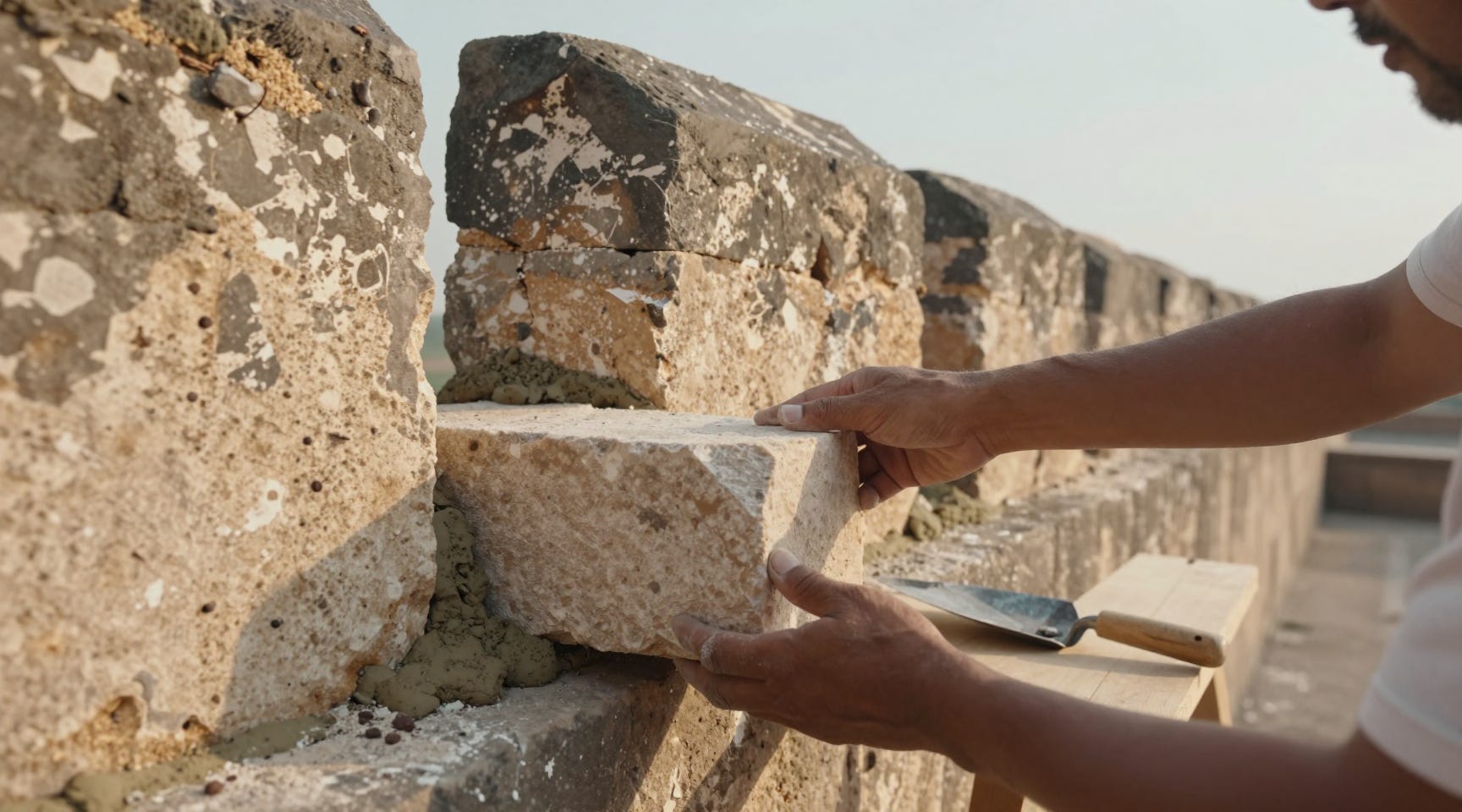
Nehemiah understood something about rubble that most leaders miss. When he arrived in Jerusalem and saw the walls destroyed, the gates burned, and the city exposed to every threat, he did not deliver a speech about how unfortunate the situation was. He did not form a committee to study the problem. He said six words that changed the trajectory of a nation: “Come, let us rebuild the wall” (Nehemiah 2:17, NLT). The walls had been in ruins for decades by that point. The rubble had become scenery. People walked past it every day without seeing it as a construction site. Nehemiah’s gift was not construction expertise. It was the refusal to accept that a breach meant the project was over. A breach in the wall is a repair order, not a demolition notice. That distinction matters more for leaders than almost any other principle in this series. Every leader will fail. Every fortress will crack. The competency that separates leaders who build lasting structures from leaders who abandon them is not the ability to avoid failure. It is the willingness to repair after failure, quickly, honestly, and without spin.
The repair itself follows a sequence, and the sequence matters because each step creates the conditions for the next one. The first step is owning the ruin. Not minimizing it. Not explaining the circumstances that led to it. Not framing it as a “growth opportunity” or a “learning experience.” Owning the ruin means stating what happened in plain language without a defense attached. “I lost my temper in Friday’s meeting. I said something harsh, and it was wrong.” That sentence costs more than most leaders are willing to pay because it offers no exit. There is no “but” clause. There is no contextual explanation about the pressure you were under. There is just the fact, owned without decoration. Confession, real confession, starts with God and extends to the people you affected. It is the hardest three seconds in leadership, and it is the only foundation on which repair can be built.
The second step is clearing the rubble. In Nehemiah’s rebuilding effort, the workers hit a wall before they could rebuild the wall. Nehemiah 4:10 (NLT) records the complaint: “The workers are getting tired, and there is so much rubble to be moved. We will never be able to build the wall by ourselves.” Rubble is the accumulated debris of the failure that blocks the path to repair. It is the unresolved tension in the relationship, the conversations that should have happened and did not, the lingering resentment on both sides, the trust that was quietly withdrawn without announcement. Clearing the rubble means going to the person you harmed and having the conversation that shame, pride, or despair told you to avoid. It means asking the most uncomfortable question a leader can ask: “What do you need from me to move forward?” That question transfers power to the person who was hurt, which is exactly where it needs to be in that moment. You cannot rebuild trust by dictating the terms of the rebuild. You rebuild it by letting the other person tell you what the damage actually looks like from their side.
The third step is laying fresh brick, and this is where the Watchman’s Protocol re-enters the repair process. The point of fresh brick is not to feel better about yourself. It is to rebuild the specific section of the fortress that failed. If your integrity leaked through exaggeration under pressure, the fresh brick is a new protocol for how you report when the news is bad. If your emotional walls failed because you were leading while depleted, the fresh brick is a standing order that you will not make personnel decisions or deliver feedback when you are running on fumes. If your relational gates swung open because contempt escaped through sarcasm, the fresh brick is a commitment to governing your tone in meetings, backed by a specific practice you can name. Fresh brick is structural. It answers the question the Protocol asks: what ARREST mechanism failed, what AUDIT question did you skip, what ALIGNMENT did you ignore, what ACTION did you take that was ungoverned? The answer to those questions becomes the new brick you lay in the exact spot where the old one cracked.
The fourth step is setting a double guard. Nehemiah 4:9 (NLT) records the posture: “We prayed to our God and guarded the city day and night to protect ourselves.” After a breach, the repaired section of the wall is the most vulnerable point in the entire structure. The enemy knows where it cracked. You know where it cracked. The temptation is to repair and move on, to treat the fix as final. It is not. A double guard means accountability. It means telling someone, a peer, a mentor, a spouse, what happened and what you are rebuilding. It means asking them to check in. “I lost my composure last week, and I am working on governing my tone under pressure. Will you ask me about it after next week’s meeting?” The leader who rebuilds alone rebuilds slowly and often rebuilds in the same weak spot. The leader who invites a double guard rebuilds faster and stronger because the accountability creates a second Watchman at the gate.
The theology of repair is not peripheral to the gospel. It is central to it. The entire narrative arc of Scripture is a repair story. Adam and Eve breached the wall in the Garden. God did not demolish humanity. He promised a Redeemer. Israel breached the covenant repeatedly. God did not abandon the project. He sent prophets, judges, and eventually His own Son. Peter, the rock on whom Jesus said He would build His church, denied knowing Jesus three times on the worst night of his life. The failure was public, devastating, and total. Jesus did not replace Peter. He restored him. Three denials met with three questions: “Do you love me?” (John 21:15-17, NLT). Each question was a repair. Each answer was fresh brick. Each commission, “Feed my sheep,” was a double guard, a new assignment that only made sense if the breach was genuinely repaired. If God treated failure as a demolition notice, there would be no church, no Scripture, and no gospel. The entire story runs on repair.
The application for the leader reading this on a Monday morning, knowing that the room is quieter than it should be, is straightforward. Repair is not a sign that your leadership failed. Repair is the proof that your leadership is functioning. The leader who never fails is a fiction. The leader who fails and hides is common. The leader who fails, owns the ruin, clears the rubble, lays fresh brick, and sets a double guard is rare, and that rarity is exactly what makes it a competency. Your team does not need a leader who never cracks. They need a leader who knows how to rebuild the wall when it does, and who starts the rebuild before anyone else has to ask for it. Where do you need to correct the record this week?
The end of March paid article is a full build guide: Integrity Foundation, Emotional Walls, Relational Gates. It includes a repair protocol, plus three one-page tools you can use to keep your leadership from drifting into micro cracks. Tomorrow we close this month by asking the question your team has already answered: whether the fortress you have been building is visible to the people who live inside it.
I write about leadership at the intersection of timeless principles and modern workplaces. Follow for weekly insights on building teams that actually work. For more articles like this consider subscribing.


